Category: Life and everything in it

  • Ballarat: The City of Sky (and Why I’m Running My First Marathon There)

    I grew up between London and Bombay – two cities where the sky is more of a rumour than a reality. In London, the clouds hog the limelight. In Bombay, the buildings do. You learn to live under a low ceiling… literally.

    So imagine me, a fully grown adult, arriving in Ballarat for the first time and being stunned – not by some landmark, not by a bustling street, but by the sky. Just… endless, unapologetic sky. A sky so big it felt like it had elbowed everything else out of the way. A sky that made me feel tiny, free, alive, and somehow wealthy.

    Honestly, I’ve decided your true wealth is measured not by what’s in your bank account but by how much sky you get to stand under. And Ballarat? Ballarat is loaded.

    I went there because of a boy – now my husband, Don – Ballarat born and bred, who casually introduced me to what he obviously assumed was a normal little town. Meanwhile, I was having a full spiritual awakening.

    Here’s how it happened:
    We’re driving in, and I’m thinking, Well this is quaint. Then the winter flowers start lining the streets like they’re auditioning for some kind of cosy fairytale. Before I know it, I’m feeling like I’ve walked into an Enid Blyton paperback (the wholesome version, not the slightly questionable ones).

    And then it hit me:
    I wasn’t just visiting.
    I belonged.

    Ballarat felt like home in the weirdest, warmest way. Not my “new” home – my original one. The one with cold air, grey skies, and the kind of comforting dreariness that instantly transported me back to my London childhood. But this time, with slow, quiet weekends that make you remember how to breathe.

    It’s funny – so many people talk about Ballarat like it’s the runt of the Victorian litter. The moody cousin. The town you only pass through on the way to somewhere shinier. People love to call it cold, boring, bleak… basically the Eeyore of Victoria. But to me? It’s magic. Underrated, underestimated, quietly spectacular magic.

    And then there are the lakes.
    Everyone knows Lake Wendouree. She is stunning. She’s also manicured, polished, and flanked by wealth. She’s the kind of lake that went to private school, plays piano, and probably has a trust fund.

    But Lake Burrumbeet?
    Oh, she’s wild. She’s gritty. She’s magnificent in a messy bun with no makeup. On a cold, stormy day, she comes alive like she’s starring in her own dramatic period film. The sky rolls in like theatre curtains. The wind gets ideas. The water doesn’t even pretend to behave. It is perfection.

    There was a day Don took me there, and for at least 20 kilometres, it was just us, the dogs, and nature, completely unbothered by civilisation. No people. No noise. No expectations. Just raw, Australian beauty at full volume. That’s when I decided that every good thing is close to nature – and Ballarat is very, very close.

    We go often now. It’s only an hour from home, but every time we roll in, it feels like the city gives me a giant bear hug. A cold bear hug, but still – love is love.

    And that’s why, in a few months, I’ll be running my first ever marathon there – the Ballarat Marathon. Because what better place to run 42.2 km than in the town that gave me sky, belonging, and a second home?

    Ballarat may not market itself as magical. But it has been for me. And I will forever be grateful to my husband for being from Ballarat – and for inviting me into this enchanted little underdog of a city that somehow became one of the great loves of my life.

  • M-A-M-D-A-N-I, Because This Moment Matters

    It’s Mam-dah-nee.

    M-A-M-D-A-N-I.

    Say it with your chest.

    Now, let’s talk about why this moment has slapped the world – brown people, young people, immigrants, first-gen dreamers, everyone – with a tidal wave of feels.

    1. Because brown kids weren’t told they could be that person

    Growing up brown usually came with three career options, depending on your family:

    Doctor. Engineer. Disappointment.

    No one ever pointed at the biggest stage in American politics or the most chaotic city in the world, and said, “That could be you.”

    So when someone who looks like us, eats the same food, carries the same generational trauma, and has the same overly involved aunties wins the mayoral seat in NYC, it doesn’t just feel like a political shift.

    It feels like a glitch in the simulation.

    A beautiful one.

    2. Because representation isn’t just a buzzword – it’s a mirror

    Young people, especially young brown people, finally get to see someone at the top who wasn’t pre-packaged in political vanilla.

    Mam-dah-nee shows up as actual himself.

    Not a watered-down, consultant-approved, culturally neutral version.

    A real brown man, name and all.

    And when young people see someone like that breaking ceilings, they don’t just clap, they recalibrate their entire sense of what’s possible.

    3. Because names carry history, and mispronouncing them is lazy

    Getting someone’s name right is the baseline of respect.

    Brown people have spent decades shortening, slicing, simplifying, anglicising, or straight-up deleting parts of their identity just to make things “easier” for everyone else.

    So when a brown mayor steps up, with a brown name, with history and meaning baked into every syllable, let’s make sure we say it right.

    We’ve said Schwarzenegger correctly for decades.

    We can handle Mamdaní.

    4. Because this win tells young people that the system is bendable

    Let’s not pretend politics hasn’t been a closed club.

    You needed pedigree, connections, and a name that fits comfortably into the Anglo mouth.

    Mamdaní’s victory says,

    “Actually, the club’s doors aren’t locked. They just needed someone brave enough to kick them open.”

    Young people are tired of performative leaders.

    They’re tired of lip service, beige leadership, and systems that pretend to be “for the people” while ignoring the actual people.

    5. Because every mispronounced name is a reminder of old power structures

    When someone says, “Oh, that name is too hard,” what they really mean is:

    “I haven’t had to try before.”

    And that’s exactly why it’s important to say Mamdaní right.

    Because saying someone’s name correctly means you acknowledge their identity, their lineage, and the space they now occupy.

    A brown man in the highest office of the most iconic city on the planet?

    Yeah, we’re saying his name properly.

    Final Word

    It’s emotional.

    It’s generational.

    It’s history dropping the mic.

    It’s a reminder that if you’re going to show up, show up fully, and honour everyone who refused to shrink to fit the world.

  • “Child-free, drama-free, Golden Retriever-filled bliss”

    By a happy, child-free, dog-loving 40-year-old woman

    There’s a curious thing that happens when you hit 40 and you’re a woman without children. You become… a bit of a mystery. Or, depending on who you’re talking to, a tragic figure in need of sympathy, spiritual guidance, or possibly a casserole.

    I can’t tell you how often this plays out: I meet someone new — life does its thing — we exchange the usual pleasantries, they clock my husband and me floating along in our bubble of genuine harmony and happiness, and then — boom — “Do you have kids?”

    As if that’s the only logical next step in the fairytale.

    I say, “No.”

    That’s it. No explanations. No awkward chuckle. No scrambling to soften the blow with a chirpy “…but we’re trying!” or “We’ve got nieces!” Just a calm, unapologetic no.

    And then — I wait.

    The reactions are quite something. A squirm. A sympathetic head tilt. A confused blink. Sometimes even a gentle pat on the arm, like I’ve just shared news of a tragic loss. It’s as if I casually mentioned I was once in a cult that banned fun.

    Occasionally, I toss in a cheerful follow-up: “But I do have two dogs!” hoping to steer the conversation toward my happy place — golden retrievers. Fluffy, loyal, slightly dopey, perfect. I am ready — ready — to discuss their personalities, grooming routines, snack preferences, and how one of them sleeps like a drunken starfish.

    But instead of joy, I usually get, “Ohhh, they’re your fur babies.”

    No. They’re just… my dogs. I love them. I didn’t get dogs instead of kids. I got dogs because I love dogs. I always have.

    I got them because I’ve always wanted big, fluffy, affectionate shadows who follow me everywhere and love me unconditionally. Frankly, I trust them more than most people.

    Now, this might be controversial — brace yourselves — but I’ve never felt maternal. I’ve never cooed over a baby in a pram. I’ve never picked up a tiny onesie and felt my ovaries squeal. That maternal yearning? That biological clock everyone talks about? Mine never started ticking. If anything, it took one look around and said, “Hard pass.”

    Maybe it was my upbringing. I had a mother who made parenting sound like a never-ending endurance challenge with no medals. She spoke candidly about how hard it was — the sleepless nights, the sacrifices, the mental load. Nothing about it sounded appealing to me. It stuck. Possibly permanently.

    But, maybe I was just born this way. While other little girls were dreaming about weddings and babies, I was dreaming of mountains, forests, and giant dogs with hearts of gold. I didn’t want a perfect white wedding — I didn’t want the white dress and the baby carriage — I wanted a partner who I luckily found in my husband, along with hiking boots and a canine sidekick to follow me to the ends of the earth.

    And guess what? That’s exactly what I have. Two glorious golden retrievers, an extraordinary husband who is my best mate, and a life that feels full, joyful, and entirely mine.

    I don’t feel like something’s missing. I don’t wake up wondering what my baby would’ve looked like. My life’s purpose was never to be a mum — not because I failed, but because I chose differently.

    My purpose? To live kindly. To love deeply. To work hard, show up, keep growing, and enjoy the ride. That’s enough for me. More than enough.

    So to all the well-meaning folks who respond to my child-free status with confusion, concern, or a look that says “you poor thing”, as if I’ve said that I have lost a limb please know — I’m good. I’m more than good. I like my freedom, my sleep, my savings, and my ability to leave the house without packing snacks and wet wipes.

    My life may not fit the usual mould, but it fits me perfectly. I have love, loyalty, laughter, and dog hair on every piece of clothing I own — and honestly, that’s more than enough.

    And in case you’re wondering — yes, my dogs do have their own Instagram. Curious about my “fur babies”? Just say the word. I’ll pull out 73 photos, a treat pouch, and possibly a slideshow. You’ve been warned.

  • Confessions of a reluctant runner: How I went from gasping at 1K to loving my 10k runs every morning

    My relationship with running is like a dramatic love story—full of resistance, obsession, and a touch of madness. Some mornings, when my alarm blares at 4:30 am, I lie there thinking, “Absolutely not. This is ridiculous. Who even does this?” But somehow, I drag myself up, lace up my shoes, and start moving. And without fail, every single time, I finish my run feeling invincible.

    The thing is, I never regret a run. Not once. Not ever. In fact, after every run, I morph into this annoyingly enthusiastic person who’s already obsessing about the next one. It’s like running has some sneaky psychological grip on me—one minute I’m groaning, the next I’m plotting my next run like it’s the heist of the century.

    Now, let me make one thing clear: I was never “a runner.” Actually, I spent a solid decade of my life (ages 14 to 24) being a dedicated smoker. Yep. Full-time. My poor lungs deserved an apology letter, a bouquet of flowers, and possibly some therapy. When I finally quit cold turkey at 24, I thought, “Great, now I’ll be healthy!” But the universe laughed. I couldn’t run a single kilometer without feeling like I was auditioning for the role of “person dramatically dying of lung failure” in some B-grade movie.

    Fast forward to today—40 years old, running 10 kilometers, 3-4 times a week, like it’s my part-time job. And here’s the plot twist: I bloody love it.

    Running is like a mental exorcism. All the cobwebs of self-doubt, imposter syndrome, random overthinking (like, “Did I really need to say ‘you too’ when the barista said ‘enjoy your matcha’?”), work stress, life stress—all gone. Cleared. Poof. It’s as if each step is stomping on negativity.

    After every run, I feel like I’ve been handed the reins to my own life again. Like I’m wearing an invisible superhero cape that says, “Come at me, world.” It’s not just exercise; it’s a full-on mental reset button.

    And yet—I’ll say it again—I am not a runner. I just love running.

    It’s wild how something I used to hate (and I mean deep, soul-level hatred) has become one of my favorite ways to start the day. At 4:30 am, no less. Whether it’s pounding the pavement or sweating it out on the treadmill, before I know it, my 10K is done, and my mind feels clearer, my mood lighter, my life… better.

    If you’ve ever thought about running but immediately followed that thought with, “Nah, I’d rather wrestle a cactus,” hear me out: running is magic. Seriously. If I can go from “feels like death after 1K” to “obsessed with running everyday”—literally anyone can.

    So, lace up, give it a shot. Worst case? You’ll hate it. Best case? You’ll fall in love with it—and with how it makes you feel.

    And if you do? Welcome to the complicated, glorious, life-changing world of running. You’ll never look back.

  • From Everest to everyday just like Superman to Clark Kent

    It’s been a few weeks now since I returned to civilisation – to cars, noise, and people who don’t find it acceptable to trek around in the same pair of pants for days on end. Life after Everest Base Camp (EBC) has brought me a lot of things: Appreciation for flush toilets, a continued addiction to ginger-lemon-honey tea, and… a bizarre case of the blues. Apparently, this is a thing. Who knew? Certainly not me, as I was too busy congratulating myself on completing something I thought was impossible.

    For context: I am not – or rather, was not – a lifelong athlete. My fitness journey only started a few years ago, when I decided that “being able to walk up a flight of stairs without wheezing” was a worthy life goal. Fast-forward to me standing at Lobuche, the penultimate tea house stop before EBC, feeling both exhilarated and vaguely terrified because, as it turns out, not everyone makes it.

    You see, Lobuche is a kind of an emotional airport terminal. It’s where those heading to Everest cross paths with those heading back – sometimes triumphant, sometimes defeated.

    My husband Donal and I were seated there, inhaling our weight in Dal Baat and sipping yet another round of ginger-lemon-honey tea (a mountain staple that tastes like a hug in a mug), when we overheard a group of Brits discussing how altitude had cut their EBC dreams short. They weren’t the only ones. Lobuche seemed full of people who had to turn back, and as I listened to their stories, I had two realisations:

    1. Holy crap, this is actually really hard.
    2. I should probably stop taking my ability to keep going for granted.

    Suddenly, the weight of what I was doing hit me. I had been so focused on the simple act of not collapsing that I hadn’t fully processed how monumental this trek was. But there, in that tea house, the enormity of it became glaringly obvious. I felt a mix of fear (because I still had another day to go) and pride (because, hey, I’d made it this far!). And when I did finally reach EBC, it felt like I’d gained a superpower a shiny, glorious badge of “You did the thing!”

    But now, back home, I’m feeling like Superman post-Kryptonite exposure. That superpower? Gone. I’ve traded the thrill of mountain air and heart-pounding summits for the humdrum of emails, grocery shopping, and trying not to murder my houseplants. It’s like I’ve reverted to Clark Kent mode – glasses on, blending into the crowd, just another person with a Garmin and a to-do list.

    Don’t get me wrong; my life is wonderful. It’s rich and fulfilling in all the ways that matter. But once you’ve had a taste of flying, walking around on solid ground feels, well, a bit meh. I miss that soaring feeling – the metaphorical cape flapping behind me as I pushed my limits, one step at a time.

    So here I am, back in the ordinary, dreaming of the extraordinary – dreaming of climbing mountains and of feeling invincible again. And while I can’t go back to the Himalayas tomorrow (mostly because my bank account is still recovering), I know this: that superpower isn’t gone. It’s just resting, waiting for the next adventure to wake it up. For now, running is still there as a backup little superpower, keeping me grounded and giving me a small taste of that soaring feeling every morning. Until then, I’ll keep sipping my ginger-lemon-honey tea, lacing up my running shoes, and pretending my suburban streets are Himalayan trails. Because, let’s face it – once you have been Superman, the Clark Kent life is just a waiting room for your next adventure. And trust me, the cape is ready and packed.

  • Embracing my inner nerd: A lifelong journey through comics and beyond

    As a kid, my happiest place was a world made of ink and paper. No, it wasn’t an alternate universe (well, kinda), but the vibrant, heart-pounding world of comics. Picture this: a mountain of snacks (or fruit, depending on my mood), a towering stack of comics taller than me, and me, happily diving into stories of Tintin, Marvel, DC, and Disney. I was set for hours – sometimes even days –living my best life in a world where adventure, danger, and heroism were just a page-turn away. It was my perfect escape, and honestly? I didn’t need anything or anyone else.

    But here’s the twist –this love for comics didn’t just fade with time. It grew, evolved and transformed. As an adult I find myself more than often on the hunt for those rare, vintage editions tucked in quaint little book shops that you might miss if you blinked. Nothing like those hidden gems that are near impossible to find. It’s not just about the paper and ink anymore; it’s about the deep connection to the stories and characters. From Star Wars to Star Trek, these worlds have become a lens through which I view life itself.

    Comics aren’t just escapes, they’re life lessons

    Now, let me tell you something: Comics aren’t just a distraction. They are life coaches in disguise. If Batman and Superman can drop their egos and team up, then surely I can get along with the people who drive me a bit crazy. And who could forget Asterix and Obelix? Their relentless spirit – thanks to Getafix’s magic potion—reminds me of my own secret weapon (recently found): Running. Every step is like a dose of that magical brew, pushing me to face my fears, tackle anxiety, and crush my insecurities like a couple of Romans getting steamrolled by the duo.

    But my absolute favourites? The small, mighty heroes. Take The Wasp, for example. She’s proof that size doesn’t define strength. Then there’s The Flash. Oh, The Flash. If ever there was a hero who knows the power of speed, it’s him. And let me tell you, there are mornings during my runs, especially when I’m pushing through the 10k mark, when I feel the need for his mental speed boost. If only I could channel those lightning bolts of energy…

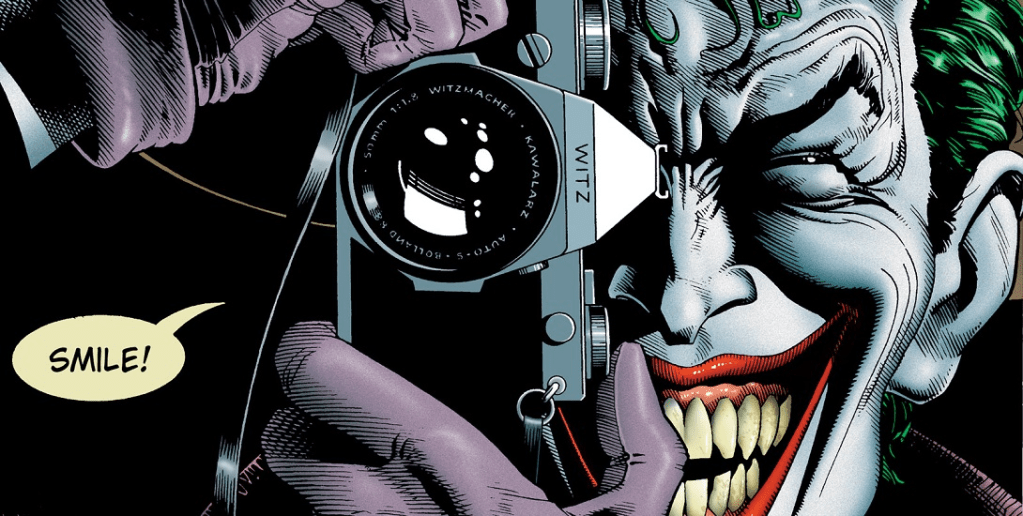
    And then, there’s the Joker…

    Now, brace yourself – this is where it gets interesting. We all know The Joker. That freaky smile, the one that gives you the chills and makes you laugh nervously. But here’s the thing: he’s one of the most beloved villains of all time. Why? He’s a psychopathic, nihilistic murderer, and yet –there’s something undeniably magnetic about him. I’ll never forget reading The Killing Joke – it was a game-changer. And let’s not forget Heath Ledger’s mind-bending portrayal in The Dark Knight. I mean, he brought madness and brilliance to life in a way that was equal parts haunting and poetic. The Joker is everything you should love to hate, but somehow, you can’t help but love him. Weird, right?

    Comfort in chaos, magic in the mundane

    These comics, these characters – they’re more than just entertainment. They’ve been with me through every life transition, like when I moved countries and needed something familiar to cling to. Whether it’s Alice in WonderlandThe Wizard of Oz, or The Little Prince, these stories have expanded my mind and filled my heart with wonder.

    To all the brilliant creators and writers who’ve brought these worlds to life, I salute you. You’ve added the kind of magic to my life that makes every day just a little bit more interesting, a little more colorful. And embracing my nerdiness? It’s not just about loving comics and movies. It’s about celebrating the joy, wisdom, and creativity they bring into my life.

    So here’s to the nerd in me (and in you!) – the one who finds strength in superheroes, solace in stories, and a never-ending fascination with the worlds created by brilliant minds. Life is richer, more vibrant, and a lot more magical because of them. May the Force be with you, always.

  • Finding purpose in the peaks

    A few nights ago, I did what I’ve done a hundred times before – I watched 14 Peaks: Nothing Is Impossible featuring the indomitable Nims Purja. Each time I watch it, I feel this itch to live better and to the fullest, pushing me to believe that we are capable of so much more than we think. Nims didn’t just climb mountains; he shattered limits, conquering all 14 peaks over 8000 meters in record time (6 months and 6 days!). If that isn’t superhuman, I don’t know what is.

    Climbing out

    Rewind a few years, and I was in a dark place. Personal issues had me spiralling, and I remember clawing my way out, one small step at a time. Eventually, I reached a point where the darkness lifted, and I could see a positive path ahead. But something was missing – a spark, a purpose.

    Despite a fulfilling life, I felt something was amiss. Life seemed to be slipping by, leaving me merely going through the motions.

    Waking up

    Then, fate intervened. I stumbled upon 14 Peaks, and watching Nims Purja with his fearless determination and boundless ambition stirred something deep within me. It was as if he reached through the screen and handed me a lifeline – a reminder that life is short, and fleeting, death is inevitable, and there’s no time to waste – so, we must seize every moment.

    That documentary was a wake-up call, a voice screaming inside me, “WAKE UP AND START LIVING!” It reminded me of a quote from Douglas Adams, author of The Hitchhiker’s Guide to the Galaxy (an excellent read, by the way): “There is an art, it says, or rather, a knack to flying. The knack lies in learning how to throw yourself at the ground and miss… Clearly, it is this second part, the missing, which presents the difficulties.”

    For me, this translated into throwing myself fully into life and letting go of fear. I decided to plunge into the unknown, to say “yes” more often, and to embrace life with the same fiery passion I saw in Nims.

    Embracing the journey

    I started pushing my boundaries, meeting new people, learning new things, and saying yes to adventures I’d once shied away from. This culminated in a life-changing journey: trekking to Everest Base Camp. The experience was both, humbling and exhilarating. The mountains have a way of calming your spirit while reminding you of your insignificance. They strip away the illusion of control and ground you in the present moment.

    The present and beyond

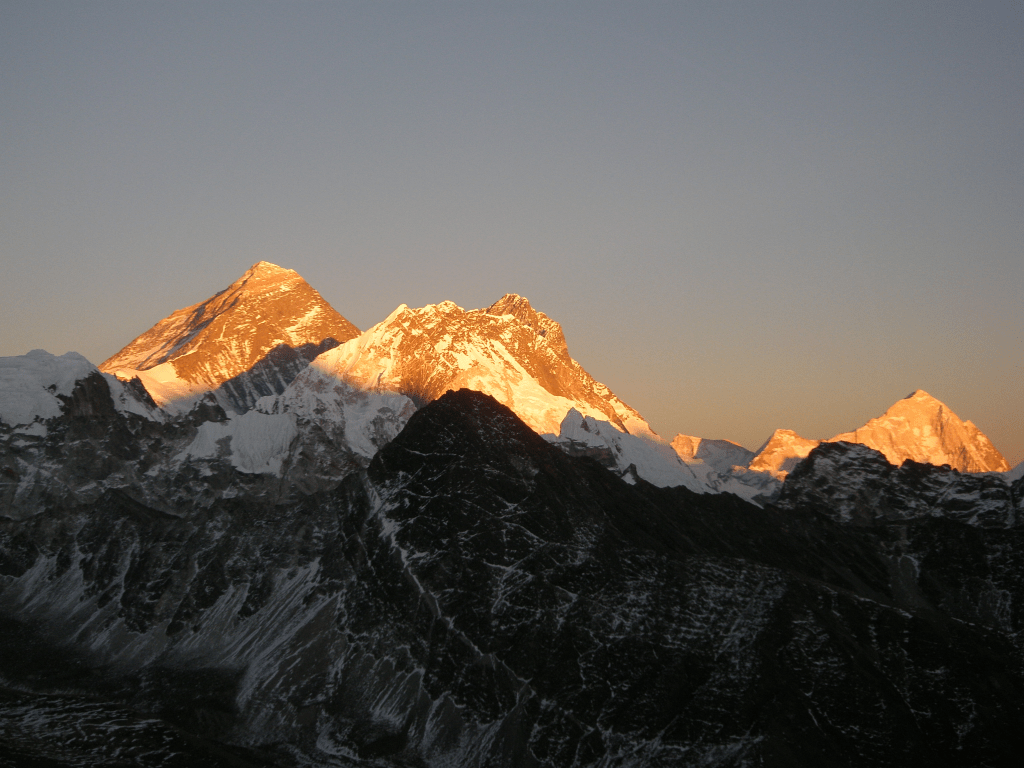
    I will forever be grateful to Nims Purja for igniting a fire within my spirit, allowing it to take flight and soar. I dream of the day I’ll return to that snow-clad terrain, surrounded by the majestic peaks of Everest, Lhotse, and the mighty others. It’s among those towering giants that I feel closest to the divine, enveloped in pure bliss. If that’s not standing in the presence of gods, I don’t know what is.

  • Howard Roark calling: A Love letter to the Petronas Towers and the power of great architecture

    What is it about great architecture that moves us? Why does a particular structure – a seemingly lifeless arrangement of steel, glass, and concrete – spark emotions so profound they leave us breathless? This week, as I stood before the Petronas Towers for the first time, I was reminded of these questions. Love at first sight? Absolutely. The towers rise like a pair of ethereal diamonds suspended in the heavens, their symmetry and brilliance so enchanting they feel almost unreal.

    And yet, as my eyes traced their soaring lines and intricate latticework, another figure loomed large in my mind: Howard Roark.

    Yes, that Howard Roark, the brooding, brilliant architect from Ayn Rand’s The Fountainhead. Roark, with his steel-like resolve, is the man who shaped my view of architecture – and, let’s face it, life itself. I was a wide-eyed preteen, barely 10 or 12, when I first picked up the book. I didn’t know it then, but those opening pages would alter the course of my thinking forever.

    Roark wasn’t just a character; he was an idea made flesh. A quiet, unyielding force who saw the world through a genius lens that defied convention. His creations weren’t just buildings; they were poetry in steel and glass, unapologetically modern, and stubbornly original. Through Roark, Rand didn’t just describe architecture – she immortalized it.

    So, as I stood in the shadow of the Petronas Towers, I found myself transported back to the pages of that life-changing book. Was it Roark himself, with his unshakable individuality, who had captured my imagination? Or was it the architecture – the way Rand described it as pure, challenging, and transcendent? Perhaps it was both.

    What I do know is that Rand’s words were a revelation. Her writing was as groundbreaking as the structures she described, a miracle of philosophy and prose. She taught me to think in ways I hadn’t known were possible – to question, to push boundaries, and to embrace the pursuit of excellence, no matter the cost.

    Now, decades later, the sight of the Petronas Towers rekindled that spark. Their design – modern yet timeless, bold yet harmonious – is nothing short of magic. They reminded me of Roark’s relentless pursuit of beauty and functionality, his belief that architecture is not just about shelter but about aspiration.

    Perhaps that’s what great architecture does: it elevates us. It pulls us out of the mundane and reminds us of the heights we can reach. It’s a love letter written in steel and stone, addressed to anyone willing to look up.

    And so, as I gazed at the towers, I smiled. Howard Roark was calling again, and this time, I was ready to answer.

  • Why do we crave adventures that make us question our sanity?

    Having recently completed the Everest Base Camp trek, I find myself haunted by a few burning questions: What is it about seeking risk, danger, and extreme conditions that makes us feel alive? Why do we voluntarily throw ourselves into situations where comfort is a distant memory, and sanity seems like an afterthought?

    I mean, I just spent weeks trudging through some of the most unforgiving terrain on Earth, battling subzero temperatures and the smell of my own unwashed self (we’ll get to that), and yet… here I am, already planning my next misadventure. Because apparently, climbing a mountain that doesn’t even have a shower at the end isn’t enough for me.

    Limits, Schlimits

    There’s something about pushing yourself –physically, mentally, emotionally – to the absolute brink that makes you feel more alive than ever. It’s like life pulls back the curtain and says, “Oh, so you think you’re tough? Let’s see how you handle frostbite and a desperate need for deodorant.” And somehow, you thrive.

    But it’s not just about the personal challenge. No, trekking to Everest Base Camp also brings some philosophical ah-ha moments. Like realising how hilariously insignificant you are.

    Picture this: you’re a tiny speck on a spinning rock in an infinite universe, worrying about your patchy lawn or that pimple on your chin. Meanwhile, the Himalayas don’t care. They’ve been standing tall for millions of years, laughing at us mortals and our silly little problems. It’s humbling. It’s mind-boggling. It’s also slightly offensive when you realise that, yeah, your grass or your pimple really doesn’t matter.

    The Cold, Hard Reality

    Now let’s talk about what really pushed me to my limits: the conditions.

    • Nightly temperatures: a brisk -25 to – 35°C.

    • Daytime temperatures: still very much below zero.

    • Showers: Oh wait, what showers?

    • Toilets: Let’s just call them “character-building exercises.”

    There was no warmth, no fireplaces, no heaters, no electric blankets. You’re cold? Tough luck. You layer up and pray that your thermal socks don’t betray you. I spent over a week in this freezing wilderness, realising just how little we actually need to survive. It’s the ultimate crash course in needs vs. wants.

    And honestly, I survived. We all do. Humans are surprisingly resilient creatures when there’s no other option. But let me tell you, there’s nothing like coming back to civilisation and rediscovering the joy of a heated room, a proper shower, and – bless the universe – Japanese toilets. Warm, magical, high-tech wonders. I wept.

    The Takeaway

    Adventures are amazing. They push us, challenge us, and give us a high that can’t be replicated. But let’s not kid ourselves – coming home to modern comforts is chef’s kiss.

    So, here’s my advice. Go seek adventure. Chase the treacherous paths, the lofty summits, and the questionable hygiene standards. But when it’s all said and done, embrace the soft towels, hot meals, and yes, that life-affirming button on a Japanese toilet. Because sometimes, adventure is about realising how great it feels to come home.